Is it more important to say “no” or “yes” when you’re a mom? I recently read a parenting book that suggested we should try to find a way to say "yes" more often. When a child asks to go to the zoo on Monday, instead of saying, "No," ideally the mom would say, “You may go on Saturday.” Unfortunately, this doesn’t work very well in my family. My young daughter would remain upset today, but remember my offer once Saturday arrived. I’ve learned this the hard way: avoid promising anything later because it’s too hard to predict the future. How can I guarantee a weekend zoo trip when someone could get sick or it might rain? I think previous generations doled out a firm “no ” easier than some of us today. In fact, a stranger walked up to me and my baby in the mall one time and offered an odd bit of advice (as people often do to new moms). The old woman said, “The most important thing you can do as a parent is to mean it when you say, ‘No.’” I smiled and nodded, wondering if this was a personal regret of hers or a general criticism of parents today. Naïvely, I assumed I’d have no problem giving my child boundaries and sticking to them. But I admit, I have been guilty of saying “no” as a reflex then second-guessing myself. Kids ask so many questions, it can be overwhelming: “Can I have a play date?” “Can I have some ice cream?” “Can I watch TV?” They want things and we hold the power to grant their wishes. I hate it when I initially say "no", then reconsider and realize I can say "yes." Therefore, my favorite answer (and one I remember my own mother giving) is to say, “Let me think about it.” Magically, time gives me perspective and strengthens my resolve. Somehow stepping away from the topic also seems to help my daughter accept my answer. Or best of all, she actually forgets what she asked for. So, I’m torn on the yes/no issue. The other day I told my seven-year-old to hang up her clean clothes. This is a task I usually do for her, but am trying to transition onto her shoulders. She asked if I would help. Because she has trouble squeezing the levers on the pants hangers, I decided that I would. She brought me the empty hangers, I placed the clothes on them and then she hung the outfits in the closet. In fact, she smiled as we worked together. Before I knew it, the laundry was put away. Afterwards, I felt good about the compromise. Until my daughter said something that I couldn’t quite decide how to take. She said, “I love you, Mommy, because you always say yes.” Does that mean I’m a good mom?
Hmmm. . . .Let me think about it and get back to you. What do you think? Should parents try to find ways to say “yes” more often?(If you enjoyed this post, you’d probably like A Mom’s Life: Warm Fuzzies, Food & Fun available at amazon.com. The paperback would make a great Mother's Day gift or present for a new mom.)
The Good Daughter by Jane Porter My rating: 5 of 5 stars I seriously didn't want this book to end. It's about a Catholic school teacher who has never had the joy of falling head over heels in love. She also hates that she has never married or had children, which she assumed would have happened by now. When she falls for clearly the wrong man, a typical "bad boy," she tells herself to move on. But he keeps popping up in her life when she least expects it. Then she realizes that he isn't quite what he seems. . . . View all my reviews
The Next Big Thing Blog Hop is a way of connecting readers to writers around the world. I would like to thank Kelly O'Dell Stanley, who just signed a book deal, for inviting me along. You can read about her original idea here: Praying Upside Down. I will answer some questions about my writing then link you to amazing authors I think you'll like. 1. What is the title of your book? On the Verge2. Where did the idea come from? I once worked for a man whose wife was in a car accident that completely changed her personality. He said she "wasn't the woman he married." This ethical dilemma intrigued me so I wrote a book where a head injury interrupts newlywed bliss. (My boss, by the way, divorced his wife. In my book club discussion questions, I ask if a man or a woman is more likely to stay married if his/her partner becomes gravely ill.) 3. What's the genre? contemporary fiction or women's fiction 4. Which actors would you choose to portray the characters in a movie? Ginnifer Goodwin from "Once Upon a Time" for Val, the main character, and Cindy Crawford for Joely, a secondary character. 5. What's the one sentence synopsis of your book? Newlyweds struggle to repair a 1920's house while trying to rebuild their relationship after a personality-changing head injury. 6. Was this independently published or represented by an agency? It was independently published after consulting with my agent. My next novel will be represented by the MacGregor Literary Agency. 7. How long did it take to write? It took about 6-8 months to write. 8. What other books would you compare this to? "The Vow" 9. Who or what inspired you to write this book? A friend of mine lives in a 1920's Spanish-style house which I've always admired. Her stories of restoration joys and nightmares inspired the On the Verge house and is featured on the book cover. 10. What else about your book might pique the reader's interest? The Midwest Book Review wrote this: "A thoughtful tale about difficult human problems with no easy solutions, On the Verge is highly recommended." If you like contemporary women's fiction, check out Kaira Rouda, who Claire Cook, author of Must Love Dogs, said "is like getting together with one of your best friends--fun, fast and full of great advice." For historical fiction, I highly recommend New York Times bestselling author, Tasha Alexander, and for inspirational fiction and non-fiction, read Peggy Sue Wells.
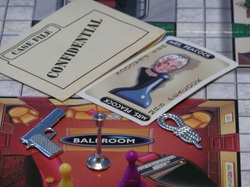
I am not good at playing games. Years ago I won at bowling and was so ecstatic, I jumped for joy. When my future husband pointed out that I wasn’t a graceful winner, I apologized and explained that I’d never won before. Not bowling, not mini-golf, not anything. Growing up, it seemed my father always won the games we played. If it were just my older brother and I, I still couldn’t compete. I told my fiance that I had plenty of practice losing. “I’m a good loser,” I promised. The other night, however, I wondered if this were true. My husband and I had bought the board game Clue for our seven year old daughter. In elementary school, I’d played it a couple times at a friend’s house and enjoyed it. After all, it had colorful characters like Mrs. Peacock and Professor Plum, miniature revolvers and candlesticks, and it offered the chance to play detective. I was excited that my daughter was finally old enough to play a game I’d truly enjoy. No more Candyland or Don’t Break the Ice for me. She requested we play every night and more often than not, my husband set aside the papers he was grading and took his place around the table. It surprised us the first time our daughter solved the mystery. Then she won again. And when she didn’t win, my husband did. Wait a minute. I noticed a pattern developing. My husband won because of his exceptional deductive reasoning skills. My daughter won because she wasn’t afraid to guess and be wrong. But me—I waited to accuse a suspect until I was 100% sure. By that time, someone else would beat me to the punch. Last night my daughter wanted to play again and I suggested we take a break. This game that I’d fantasized about as a child turned out to be yet another one in which I had no skill. Then my husband teased me, “Momma doesn’t want to play because she always loses.” Here the Mommy Guilt kicked in. Everything I say and do is setting an example. How could I expect my little girl to smile and say, “Good game” after she lost when I didn’t? So I took a deep breath and agreed to participate. Right away I could tell I was going to lose again. I rolled plenty of ones and twos. I got trapped in a room I didn’t want to be in. The fates conspired against me. Too soon my daughter bragged that she knew the weapon and the guilty party. All she had left was to figure out the location of the crime. My husband said he had it narrowed down to 25%. Ugh! I told them both to be quiet or people wouldn’t like playing with them. (And by “people” I mostly meant me.) My husband “Awwww” ed in my direction. That’s when I realized that after plenty of experience, I hadn’t even mastered the art of losing gracefully. Sensing that one of my opponents would soon win, I was frustrated that they seemed closer to a solution than I was. But I did have a pretty good guess. I decided to take a page from my daughter’s playbook. For the first time ever, I dared to make an accusation without 100% certainty. Fate smiled upon me and I was right. I’d won! Finally I felt the rush of victory. I reminded myself not to smile too broadly. Good sportsmanship (and good role modeling) take effort. What amazes me is how well my daughter handles it when she guesses the answer and is wrong. Patiently she waits for the game to end, giddy because we are doing something together as a family. She doesn’t let her mistake stop her from taking a chance the next time, either. Perhaps those who excel at games, like in life, are those willing to risk failure. Sometimes we win and sometimes we lose. What matters is that we had fun along the way--together.Are you a good loser? I'd love to hear your comments!If you'd like to be the first notified about book giveaways and new releases, please click here and leave your e-mail address. I plan on giving away several copies of my novels soon!
The View From Here by Cindy Myers My rating: 5 of 5 stars I must've tried to read five books before I stumbled across this gem. It started with a devoted wife packing up after her husband divorced her. She'd not only put off college at his request, but also motherhood. Just when she doesn't know which way to turn, she inherits a tiny cabin in Colorado from her estranged father. In hopes of learning more about the father that abandoned her, she goes there and inadvertently discovers herself. The inhabitants of the small town welcome and resent her all based upon how her father had treated them. I can't express how refreshing it was to read a book like this with believable yet intriguing secondary characters. This novel made me wish I had a cabin in Colorado! View all my reviews
The Sweetness of Forgetting by Kristin Harmel My rating: 5 of 5 stars I wasn't sure if I would like this book since the main character's grandmother has Alzheimer's and I was worried it would be too depressing. It wasn't, though. In fact, Hope's grandmother reveals important family secrets because she doesn't want to take them to the grave. What the grandmother reveals are the names of people she left in Paris while fleeing the Nazis. I ended up learning a great deal about that time period in history and how family secrets can inadvertently impact other generations. I liked how uncovering her grandmother's past helped Hope learn to take risks again. I will definitely check out the other books by Kristin Harmel. View all my reviews
The Underside of Joy by Seré Prince Halverson My rating: 5 of 5 stars This is what great women's fiction is about. The main character, Ella, is a wonderful woman who married a man whose children had been abandoned by their birth mother. Unfortunately, her husband dies unexpectedly and suddenly the "real mom" shows up and wants her kids. The courts usually favor the birth parents, but Ella is the only mom the three year old even recognizes. The older child, however, seems happy to have her birth mother back. I couldn't believe I was rooting for the stepmother in this book, but I was. The ending caught me by surprise and I appreciated that, too. My only regret is that this is the first book by this author, so now I must wait to read more. View all my reviews
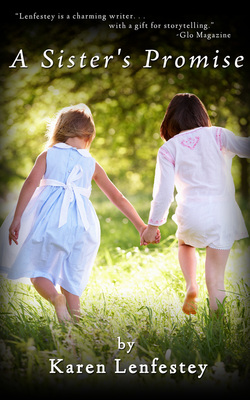
Have you already watched Miracle on 34th Street and It’s a Wonderful Life and every other Christmas movie you can think of? I love the classics, but I also enjoy discovering a family film I’ve never seen before. If you’re like me, longing for a heart-warming story in which you don’t have all of the lines memorized, check out Prancer. Sam Elliott plays a financially-strapped widower who spends more time scolding his precocious daughter, Jessica, than talking to her. He’s at such a loss, he’s planning on sending her to live with her aunt. Before he can go through with his plans, his eight-year-old daughter finds an injured reindeer that she’s convinced is Prancer. Hiding and stealing food for this reindeer puts Jessica even more at odds with her gruff father. This precious movie reminded me of the innocence and unconditional love of children. It almost made me cry while leaving a big, Santa-inspired smile on my daughter’s face. For a Christmas movie that speaks to the reality of hard times and the magic of the season, treat your family to Prancer. Be sure to treat yourself to A Sister’s Promise which provides a Happy Ending with a Twist. For a chance to win a free autographed copy of “What Happiness Looks Like”, click here. Please "like" and "tweet."
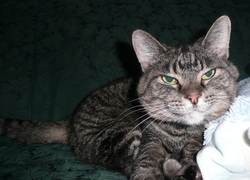
“I wish Romeo could have kittens,” my seven-year-old daughter laments. I know, you’re thinking Romeo can’t have kittens because Romeo is a male cat. That’s what we thought, too, when we adopted the gray striped kitten from the animal shelter. Since he was so affectionate, we named him Romeo. Then at our first trip to the vet to discuss getting the cat fixed, we learned that he was really a she. By then, I thought it might confuse the kitten to change its name. Either way, Romeo will never have kittens. Now ten years old, the cat spends most of her day napping under the bed or shedding in my favorite chair. So it makes sense that my daughter wants a cute, playful kitten. “I like kittens, too,” I say. “But they grow up so fast.” Kind of like kids—only faster. Plus I explain it would be twice the litter to scoop and twice the hairballs to clean. Like all starry-eyed children, my daughter offers to do all of the work. I do not fall for these empty promises. So she gets out a piece of paper and writes “Dear Santa.” She looks up at me, “Mom, how do you spell ‘real kitten’?” Uh-oh. Will this be the year Santa disappoints her? Maybe another kitten wouldn’t be much more trouble. But then I remember. We’ve been a two-cat household before. We had a crazy calico that used to bite for no reason. I cried when I realized she couldn’t stay once we had a baby. Then my husband fed a starving stray on our back porch. We refused to name the black feline, calling her simply Kitty-kitty. Eventually I caved and took her to the vet for her vaccinations. I resented the hassle of feeding two cats—one inside and one outside. Then one day Kitty-kitty howled and started acting strange. I had no idea she’d soon die in our backyard. I cried and cried. Why hadn’t I realized something was terribly wrong? That’s the thing about pets. You love them, but eventually they make you cry. Maybe it’s not just the hassle I want to avoid, but also the heartache. All of these memories make me realize I should appreciate what I have. Suddenly I wonder where Romeo is hiding so I can scratch behind her ears. I just love it when she purrs. . . . (Please do not take this as an invitation to drop off any kittens on my doorstep!) If you enjoy a story that warms you like the love of a good pet, you’ll appreciate On the Verge, where a husband’s head injury leads him to bring home a puppy and buy a house without talking to his new wife. Available on Amazon for $2.99.For a chance to win an autographed copy of What Happiness Looks Like, click here. CAST YOUR VOTE: Are two cats better than one?
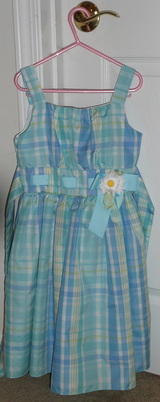
I should’ve known something would go wrong. Early in the morning I had to drop my cat off at the vet’s office for her first teeth cleaning and get home in time to catch the school bus. When my alarm buzzed, I walked into my seven-year-old’s room to discover she was already dressed. Excellent! That left plenty of time for her to eat breakfast. No problem. Now I had a cushion in case I had to chase my cat around the house like last time. I could even grab something for myself to eat and in my wildest dreams, drink a cup of coffee. As I wrangled my cat into the carrier, I kept worrying that something would go wrong. That’s because pets and kids are unpredictable. That’s because whenever I think we have plenty of time, something always happens. That day’s “something” was my daughter spilling V-8 juice all over the floor, a white dish towel and of course, on her pink tights. Somehow I remained calm as I used about fifty paper towels to tackle the mess. My daughter, who was succumbing to a cold, did not remain calm. She was wearing a pink shirt, pink skirt and pink tights. In her mind, only pink tights would do. I told her to wear white ones. She went to her room and came back mumbling that her shirt didn’t have any white on it. Because there wasn’t white on her outfit, she didn’t want white tights. Again, as I mopped up red puddles, I explained that white is a neutral and matches everything. (I’d love to see Stacy & Clinton take on a sleepy seven-year-old on What Not to Wear!) To move things along, I helped my daughter pull on her tights. She whined that they didn’t fit. (They’re brand new, size 7-10). I explained how tights are probably called tights because they feel tight. She didn’t laugh. Then I thought if anyone should be upset, it’s me. I just had to clean tomato juice splattered all over my kitchen and I’m not sure the stain will come out of the tea towel my grandmother embroidered with a kitten and the word “Monday.” Was there any doubt in your mind that this was a Monday? As I drove through the morning darkness, listening to the radio dj predict snow, I couldn’t help feeling a bit of déjà vu. It seems whenever we’re relaxed, running ahead of schedule, a spill or a rip or some other minor catastrophe puts the rush back into our routine. Have you noticed that once you have kids, if anything can go wrong, it will? Unless of course, you’re expecting it. According to Wikipedia, Murphy’s Law dates back to 1877. I say it’s been around longer than that—ever since the first woman gave birth. If you’re a busy woman, having a Murphy's Law kind of day, treat yourself to the novella, Made for Two. It’s a “sweet read with depth” for 99¢.
|